
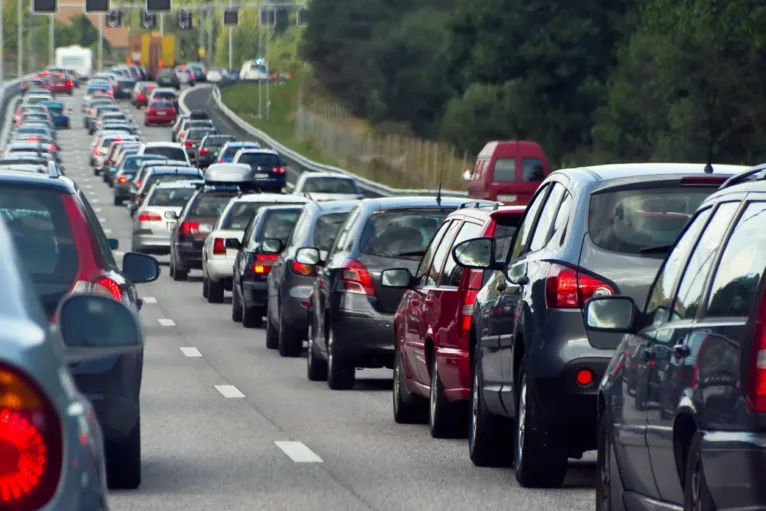
Tailgating is one of the most common and dangerous driving behaviors on the road today. Defined as following another vehicle too closely, tailgating significantly reduces the time a driver has to react to sudden stops or changes in traffic. The result is often a preventable rear-end collision that leaves innocent drivers and passengers seriously injured.
With Billions won for accident victims, including some of the largest car and truck accident verdicts and settlements in Texas and U.S. history, our Houston Car Accident Attorneys have seen firsthand how reckless actions like tailgating can change lives in an instant. Our commitment is to hold negligent drivers fully accountable, secure the maximum compensation possible, and ensure our clients have access to the best medical care available.
When an accident occurs because of tailgating in Houston, TX, determining liability is usually straightforward—but there are some important nuances worth understanding.
The General Rule: The Tailgating Driver Is Liable
In most cases, the driver who is following too closely is considered at fault for the accident. Traffic laws in every state require drivers to maintain a safe following distance, allowing enough space to stop safely if the vehicle ahead brakes suddenly. When a driver fails to do this and causes a rear-end collision, they are typically presumed negligent.
This presumption exists because the trailing driver is in the best position to prevent the crash. They control how closely they follow and are expected to adjust for speed, traffic, weather, and road conditions. If they cannot stop in time, it is usually seen as a failure to drive responsibly.
Why Tailgating Is Considered Negligent
Tailgating is not just unsafe—it is often a direct violation of traffic laws. Negligence in personal injury law occurs when someone fails to act with reasonable care, and that failure causes harm.
Following too closely meets this definition because it:
- Reduces reaction time
- Limits visibility of the road ahead
- Increases the severity of collisions
Because of these risks, insurance companies and courts frequently assign fault to the tailgating driver without much dispute.
Exceptions to the Rule
While the rear driver is usually liable in a tailgating accident, there are situations where the lead driver may share some or all of the responsibility. These exceptions depend on the specific facts of the crash and whether the lead driver acted negligently or recklessly.
Some common exceptions include:
- Sudden or unreasonable stops: Abrupt braking without a valid reason may shift partial fault to the lead driver, though the rear driver is still expected to maintain a safe distance.
- Brake checking: Intentionally slamming on the brakes to intimidate another driver can make the lead driver partially or fully liable.
- Faulty brake lights: If brake lights are not working properly, the trailing driver may not receive adequate warning, potentially shifting some liability.
- Chain-reaction accidents: In multi-vehicle crashes, fault may be shared among multiple drivers depending on how the accident occurred.
Ultimately, determining liability in these situations often requires a detailed investigation into the actions of each driver and the circumstances leading up to the crash.
Comparative Fault and Shared Liability in Texas
Texas follows a modified comparative fault rule, meaning multiple drivers can share liability for an accident. You can recover damages as long as you are not more than 50% at fault, but your compensation is reduced by your percentage of fault.
For example, if you are 20% at fault, your recovery is reduced by 20%. However, if you are found more than 50% responsible, you cannot recover any compensation.
Evidence That Helps Determine Liability
To establish who is at fault in a tailgating accident, several types of evidence may be used:
- Police reports
- Eyewitness statements
- Traffic camera or dashcam footage
- Vehicle damage patterns
- Accident reconstruction analysis
This evidence helps clarify whether the trailing driver was following too closely or if other factors contributed to the collision.
Injuries Commonly Associated with Tailgating Accidents
Rear-end collisions caused by tailgating often result in serious injuries, including:
- Whiplash and neck injuries
- Back and spinal cord injuries
- Concussions or traumatic brain injuries
- Soft tissue damage
Even low-speed collisions can cause lasting harm, especially when the impact is unexpected.
Contact an Undefeated Houston Car Accident Lawyer at Zehl & Associates for a Free Consultation
Liability in tailgating accidents is often clear, with the trailing driver bearing primary responsibility. However, exceptions do exist, and each case depends on its specific facts. Understanding how fault is determined can help you better navigate the aftermath of an accident and protect your right to compensation.
If you were injured in a rear-end collision caused by a tailgating driver in Texas, you don’t have to handle the legal process alone. Contact an undefeated Houston car accident lawyer at Zehl & Associates for a free consultation.
We proudly serve Harris County, Midland County, and throughout the state of Texas. We are located in Houston and Midland and throughout the state of Texas:
Zehl & Associates Injury & Accident Lawyers – Houston
2700 Post Oak Blvd #1000, Houston, TX 77056
(888) 603-3636
Open 24 hours

Zehl & Associates Injury & Accident Lawyers – Midland
306 W Wall St Suite 701, Midland, TX 79701
(432) 220-0000
Open 24 hours