
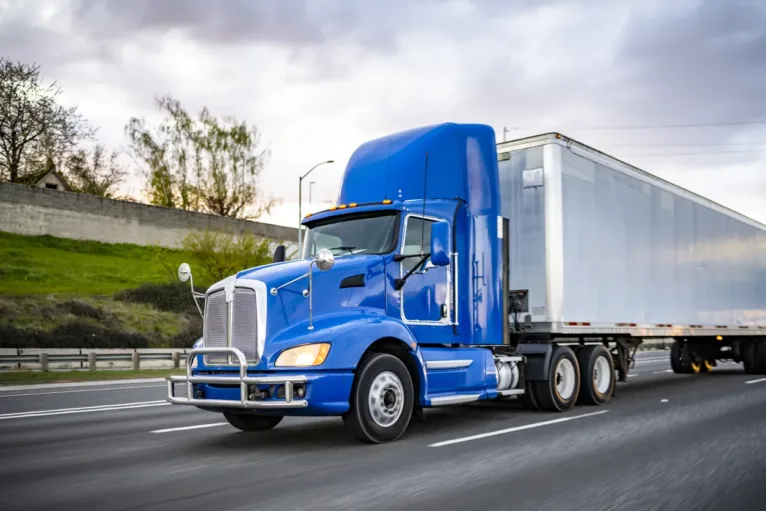
A truck is any motor vehicle designed to transport cargo, while a semi-truck is a specific type of commercial truck that uses a tractor to pull a detachable trailer. In other words, every semi is a truck, but not every truck is a semi.
The differences matter in Texas because semi-trucks are significantly larger and heavier than other trucks, making truck accidents far more likely to result in catastrophic injuries.
What Is a Truck?
A truck is a broad category of vehicle built to carry cargo, equipment, or materials. Trucks come in many shapes and sizes, from light-duty pickup trucks for personal transportation to heavy-duty commercial vehicles for businesses.
Common types of trucks include:
- Pickup trucks
- Box trucks
- Dump trucks
- Tow trucks
- Delivery trucks
- Garbage trucks
- Semi-trucks
Because the term “truck” encompasses so many different types of vehicles, it’s important to know exactly what type of truck was involved in an accident. Different vehicles are subject to different safety regulations, insurance requirements, and operating standards.
What Is a Semi-Truck?
A semi-truck, also called a tractor-trailer, 18-wheeler, or big rig, is a commercial vehicle consisting of a tractor unit that pulls a detachable trailer. Unlike most other trucks, the trailer has no front axle and relies on the tractor for support, which is why it’s called a “semi.”
Semi-trucks are designed to transport large amounts of freight over long distances. Depending on the cargo and configuration, a fully loaded semi can weigh up to 80,000 pounds under federal weight limits, making it drastically heavier than passenger vehicles and most other trucks.
Because of their size and weight, semi-truck drivers must generally hold a Commercial Driver’s License (CDL) and comply with federal safety regulations governing hours of service, vehicle inspections, and maintenance.
What Are the Main Differences Between a Semi and Other Trucks?
The primary difference between a semi-truck and other trucks is size and purpose. While many trucks are designed for local transportation or personal use, semis are built to haul heavy freight across state lines and through major commercial corridors.
Some of the biggest differences include:
- Size: Semi-trucks are substantially larger than pickup trucks, box trucks, and delivery vehicles.
- Weight: A fully loaded semi can weigh up to 80,000 pounds, while most passenger vehicles weigh between 3,000 and 6,000 pounds.
- Cargo capacity: Semi-trailers carry significantly more freight than other trucks.
- Licensing: Semi drivers generally need a Commercial Driver’s License, while many other truck drivers do not.
- Stopping distance: Because of their weight, semis require much longer distances to stop safely.
- Federal oversight: Most commercial trucking companies and drivers must comply with Federal Motor Carrier Safety Administration (FMCSA) regulations.
These differences not only affect how semi-trucks operate but also influence how truck accident claims are investigated and litigated. At Zehl & Associates, Ryan Zehl and our undefeated Houston truck accident attorneys regularly handle these complex cases, recovering billions of dollars for injured clients and securing record-setting verdicts and settlements.
Why Are Semi-Truck Accidents Often More Serious?
Semi-truck accidents often cause more severe injuries than crashes involving passenger vehicles because of the truck’s size, weight, and stopping distance. A fully loaded semi-truck can weigh up to 80,000 pounds, meaning it generates significantly more force in a collision than a typical car or SUV.
Several factors contribute to the severity of these crashes, including:
- Longer stopping distances
- Larger blind spots
- Greater risk of underride and override collisions
- The potential for cargo shifts or jackknife accidents
- Higher likelihood of catastrophic injuries, such as traumatic brain injuries and spinal cord injuries
Because of these risks, collisions involving semi-trucks often require more extensive investigations than typical car accidents, particularly when determining liability and the full extent of an injured victim’s damages.
Frequently Asked Questions
Is Every Semi-Truck Considered a Truck?
Yes. A semi-truck is one type of truck. However, the term “truck” also includes pickups, box trucks, dump trucks, delivery trucks, and many other commercial and personal vehicles.
Why Is It Called a Semi-Truck?
The trailer is called a “semi-trailer” because it lacks a front axle and relies on the tractor for support. Together, the tractor and semi-trailer form what is commonly known as a semi-truck.
Are Semi-Truck Accidents Different From Car Accidents?
Yes. Semi-truck accidents often involve more severe injuries, multiple potentially liable parties, higher insurance policy limits, and federal trucking regulations that do not apply to ordinary passenger vehicle collisions.
Who Can Be Liable for a Semi-Truck Accident?
Depending on the circumstances, liability may include the truck driver, the trucking company, a maintenance provider, a cargo loading company, or a vehicle manufacturer.
Contact Zehl & Associates to Schedule a Free Consultation With an Undefeated Houston Truck Accident Attorney
If you or a loved one has been injured in a collision involving a semi-truck or other commercial vehicle, having the right legal team can make a significant difference. Truck accident cases often involve complex investigations, multiple liable parties, and substantial evidence that must be preserved quickly.
Zehl & Associates has recovered billions of dollars for injured clients and is committed to helping accident victims pursue the compensation available under Texas law. Reach out today to schedule a free consultation with an undefeated Houston truck accident lawyer.
We proudly serve Harris County, Midland County, and throughout the state of Texas. We are located in Houston and Midland and throughout the state of Texas:
Zehl & Associates Injury & Accident Lawyers – Houston
2700 Post Oak Blvd #1000, Houston, TX 77056
(888) 603-3636
Open 24 hours

Zehl & Associates Injury & Accident Lawyers – Midland
306 W Wall St Suite 701, Midland, TX 79701
(432) 220-0000
Open 24 hours