
Undefeated Texas Explosion Lawyers
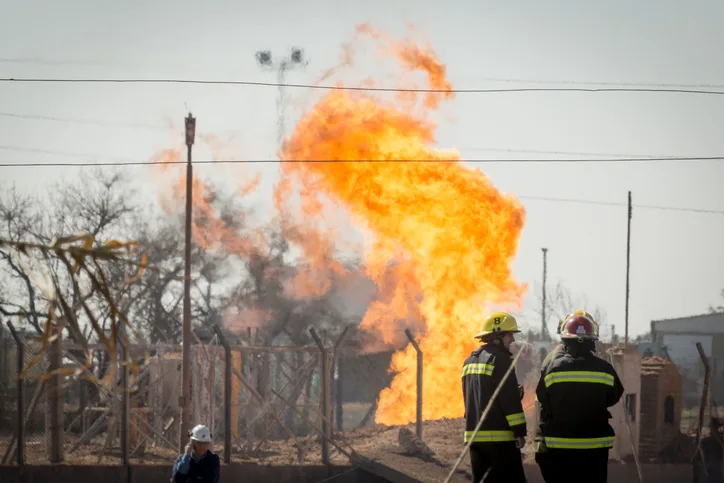
Last month’s fatal Oak Cliff gas explosion in Dallas has brought new attention to a problem that has long plagued Texas: deadly natural gas leaks caused by excavators who either failed or were unable to verify the locations of underground pipelines before they began digging.
4,800 Excavator Pipeline Strikes Reported in Texas This Year
How often do excavators strike Texas pipelines? More often than most people realize. In fact, according to a recent KERA News analysis of data compiled by the Texas Railroad Commission, excavating crews have already damaged underground pipelines more than 4,800 times this year alone. That’s more than 25 strikes every single day.
At least 177 pipeline strikes reported in Dallas during 2026 involved excavating companies or contractors that never notified the state before breaking ground. Statewide, roughly one in three excavators who struck a natural gas line didn’t bother to call Texas 811, a free service that arranges for underground utilities to be marked prior to digging.
Unfortunately, the issue of non-compliance extends far beyond Texas. In fact, the National Conference of State Legislatures has identified excavation damage as a leading cause of underground infrastructure destruction — including oil and gas pipelines, water and sewer networks, and fiber-optic cables — in the United States. From 2005 through 2016, 875 pipelines were damaged nationwide due to excavation incidents, resulting in 40 fatalities, 166 hospitalizations and more than $322 million in property damage.
According to the Pipeline Safety Trust, 2023 and 2024 were among the deadliest years for gas explosions in two decades. The Pipeline and Hazardous Materials Safety Administration recorded nearly 1,500 pipeline incidents over just those two years, resulting in at least 42 deaths and 84 critical injuries.
Notification Can Prevent Pipeline Ruptures, Gas Explosions
Texas law is clear on what excavators must do before they break ground. The Underground Facility Damage Prevention and Safety Act — commonly called the “call before you dig” law — requires anyone planning to dig to notify the state’s One-Call Notification Center at least 48 hours in advance, so that underground utilities can be located and marked free of charge.
The notification requirement is not limited to professional contractors and construction companies. It applies to homeowners as well, even for projects as minor as building a fence, installing a mailbox, putting in a sprinkler system or planting a tree.
“First and foremost … it’s the responsibility of anyone who’s performing an excavation to make notification calls,” Railroad Commission spokesperson Bryce Dubee told KERA. “So for anyone who is going to be moving any type of earth near an underground pipeline or hazardous liquid or anything else like that, that’s the first step.”
Yet despite years of public education campaigns by industry groups and regulators, it’s apparent that far too many excavators in Texas continue to flout the law. Thousands of times this year alone, someone climbed into an excavator and started digging near underground pipelines without taking the most basic precautions intended to keep both workers and communities safe.
Salvatore Salamone, an engineering professor at the University of Texas who has done extensive research into pipeline safety, told KERA that accurately locating buried pipelines remains a serious technical challenge — particularly for non-metallic pipes — even when excavators do everything right.
“There are a lot of construction sites,” Salamone said. “Identification of these pipelines, mapping the location is going to be crucial. And most of the time, especially for pipelines which are not metallic … sometimes can be difficult to identify these underground pipelines.”
Sensor-based technologies for remotely locating and assessing pipelines do exist. However, according to Salamone, they’re either not yet widely available or practical to use at all dig sites.
Other Failures that Cause Explosions in Texas
Not every pipeline strike results from an excavator who ignored notification requirements. Even contractors who follow proper protocols sometimes strike gas lines for any number of reasons. In fact, the Texas Railroad Commission has identified several root causes of pipeline strikes that have nothing to do with whether an excavator called 811 or not, including:
- Locator error:. Even when excavators call 811, the locator sent to mark underground utilities can get it wrong — misidentifying the depth, path, or exact position of a buried line — leaving excavators with a false sense of security.
- Failure to maintain clearance/failure to use hand tools: Once marks are in place, excavators are required to use hand tools or soft digging methods within the tolerance zone around a marked line. Heavy equipment operators who skip this step and dig straight through with machinery dramatically increase the risk of a strike.
- Unlocatable facilities: Some pipelines — particularly older non-metallic lines — simply cannot be accurately located with standard equipment, leaving excavators no reliable way to avoid them.
- Incorrect facility records or maps: Pipeline operators are required to maintain accurate maps of their underground infrastructure, but records are not always up to date. A pipe that was rerouted, replaced or installed decades ago may not appear where the maps say it does.
- Faded or unmaintained marks: On longer projects, marks can fade or disappear entirely before work is complete, leaving excavators without the guidance they need.
- Procedural violations. Texas law requires excavators to begin digging within a specific time window after their locate ticket is issued. However, excavators sometimes jump the gun and start before utility marking is complete, completely unaware of what’s buried beneath them.
The Oak Cliff tragedy, which killed 3 people—including a child—and injured 5 others, appears to have been the result of a locator error. An excavator in McKinney had damaged an Atmos Energy polyethylene pipeline near the complex just days earlier, despite the notification center being contacted. But it turns out, the flags marking the pipeline’s location incorrectly indicated it was buried 4 feet deep, causing the excavator to strike the line anyway.
An anonymous excavator who spoke with KERA asserted that locators fail to identify lines multiple times a year, particularly the smaller service lines running from mains to individual homes and businesses.
“If they don’t mark it, and they don’t have an indication of it being there, well, then we don’t either,” he said. With older utility lines, he added, records showing where lines actually run may be sparse or nonexistent.
Recent Texas Gas Explosions Linked to Ruptured Lines
Unfortunately, the Oak Cliff tragedy isn’t the first pipeline-related explosion to cause death and destruction in Texas. Such disasters have plagued the state for years. A few of the more recent incidents include:
The 2018 Atmos Energy Dallas Gas Explosion
On February 23, 2018, a natural gas-fueled blast destroyed a Dallas home, tragically killing a 12-year-old girl and injuring four other members of her family. Unbelievably, the blast was the neighborhood’s third natural gas-related incident in three days. What’s more, federal investigators later determined that Atmos Energy had been aware of natural gas leaks in the neighborhood for at least seven weeks before the deadly explosion.
The cause of the disaster? The ignition of gas that had leaked from a main damaged during a sewer replacement project years earlier. That damage had gone entirely undetected by Atmos, despite the two related gas incidents on the same block in the days before the fatal blast.
The 2020 Enterprise Products Explosion in Martin County
On July 28, 2020, a ditching crew struck a high-pressure gas line owned by Enterprise Products near Highway 137 in Martin County, triggering an explosion that engulfed the truck in flames. Four workers were rushed to area hospitals. Three were treated and released, but a fourth suffered critical burns and was airlifted to a burn unit in Lubbock.
The 2021 CenterPoint Explosion in Spring, Texas
On March 5, 2021, seven CenterPoint Energy workers suffered burns and other serious injuries when a natural gas line exploded in Spring, Texas, about 28 miles outside Houston. According to the Harris County Sheriff’s Office, a Comcast crew working in the area had punctured a gas line. A CenterPoint crew was dispatched to make repairs, but ruptured a separate six-inch high-pressure main line in the process of leaving the site.
The resulting explosion sent flames shooting more than 20 feet into the air, destroyed three CenterPoint trucks, damaged a home and forced around 100 nearby residents to evacuate. One of the seven injured workers was airlifted in critical condition to Memorial Hermann. Six of the seven remained hospitalized with second- and third-degree burns.
The 2021 Atmos Energy Explosion in Collin County
In September 2021, a ruptured natural gas line triggered an explosion at an Atmos Energy site in Collin County, killing two contractors and putting two others in the hospital. It was the latest in a series of deadly incidents along Atmos’ Texas pipeline network that, according to the Dallas Morning News, had by that point killed at least nine people, seriously injured 22 others, and destroyed more than two dozen homes since 2006.
The 2022 Atmos Energy Explosion in Lubbock
In March 2022, a third party digging in an alley struck a 2-inch Atmos Energy gas line in Lubbock, rupturing it. The resulting explosion severely damaged a home and forced residents of 35 nearby homes to evacuate while firefighters worked to contain the blaze.
The Consequences of a Texas Gas Explosion: Common Injuries
Natural gas explosions are among the most violent and physically destructive disasters a person can experience, and the injuries they leave behind are typically severe and often permanent. Victims may require years of medical care and rehabilitation, and even then, they might not fully recover.
- Burn Injuries: Anyone caught near the point of ignition can suffer burns over large portions of their bodies, often requiring multiple surgeries and skin grafts. Many are left with permanent scarring and disfigurement that affects not only their physical appearance but also their ability to participate in daily activities and enjoy the quality of life they once knew.
- Traumatic Brain Injury: The shockwave produced by a gas explosion can cause traumatic brain injuries, even in victims who are not directly in the blast zone. In the worst cases, victims can suffer severe injuries that cause permanent cognitive impairment, memory loss, personality changes and an inability to return to work or independent living.
- Lung Damage: Survivors who inhale smoke, combustion byproducts or natural gas itself in the moments following an explosion can suffer serious and lasting damage to their lungs and respiratory system. These injuries may include the scarring of lung tissue, chronic breathing difficulties and long-term pulmonary disease, and symptoms may not present until weeks or months after the explosion.
- Fractures, Crush Injuries and Amputations: When a gas explosion tears through a home or building, collapsing walls and ceilings send debris and shrapnel flying with devastating force. Victims can suffer broken bones, crush injuries, internal organ damage and, in the most severe cases, traumatic amputations.
- Psychological Trauma: The sudden, violent and unpredictable nature of these events — the loss of a home, the death of a family member, the realization that a routine day turned catastrophic without warning — leaves lasting marks that are not always visible but are no less real. Post-traumatic stress disorder, anxiety, depression and an inability to return to normal life are common among explosion victims and the families of those killed.
What to Do After a Gas Explosion in Texas
Surviving a gas explosion is only the beginning. Insurance companies representing excavation contractors, utility companies and property owners are looking to close claims as quickly and as cheaply as possible, no matter where that leaves you and your family. So what can you do to protect your rights and put yourself in the best position to recover the maximum compensation possible?
- Get medical attention immediately: Even if you feel fine, get checked out. Some injuries — including traumatic brain injuries and internal injuries — aren’t immediately obvious. And without a medical record tying your condition to the explosion, your claim is far more difficult to prove.
- Report the incident in writing: Even if they’re aware, report the explosion, any property damage, and any injuries to the responsible party — whether that’s your employer, a landlord, a utility company, an excavating company, or some other property owner. Be sure to keep a copy of your correspondence.
- Don’t give a recorded statement or sign anything: Once you’ve notified the responsible party, you should cease all communications. Their insurance adjuster represents the carrier, not you. You have no obligation to speak with them, provide a recorded statement, or sign anything without legal advice from your own attorney. If you do talk with the adjuster without first consulting a lawyer, you’re likely to make a mistake that will hurt your company.
- Follow your doctor’s orders: Keep all follow-up appointments, fill your prescriptions, and do everything your medical team recommends. Failing to stick with your treatment plan will slow your physical recovery and give the insurer ammunition to argue your injuries weren’t as serious as you claim.
- Preserve physical evidence: If your property was damaged in the blast, take photos before anything is removed or repaired. Keep clothing and personal belongings damaged in the blast exactly as they are — unwashed and unaltered — until you’ve spoken with an attorney.
- Keep all documentation: Hold onto every medical bill, receipt and out-of-pocket expense related to the blast, including hotel bills if your home was uninhabitable for any period of time. Track missed work and lost wages related to your injuries, and keep a running journal describing how your injuries are affecting your daily life, your relationships and your ability to get around.
- Don’t take the first offer: We’ve seen it time and again. The company moves to settle claims quickly, sometimes within just days of an explosion. But these offers are almost always low-ball settlements that don’t come close to covering all losses, particularly future medical care, lost earning capacity, or permanent disability you might experience in the future. Once you sign a release and accept that check, you can’t reopen your claim, even if your injuries turn out to be far worse than yo thought.
Undefeated Texas Gas Explosion Lawyers: Call 1-888-603-3636
In addition to winning billions, our Undefeated Texas Pipeline Explosion Lawyers consistently secure record-breaking verdicts and settlements—including the #1 Largest Burn Settlement in U.S. History—for clients across Texas and throughout the United States.
If you or a loved one were hurt in a pipeline or natural gas explosion, call 1-888-603-3636, use the “chat” button on our homepage, or click here to send us a confidential email through our Contact Us form.
All consultations are free, and you won’t owe us a dime unless we win your case.