
Undefeated Maritime Attorneys
Few workers face as much danger as the men and women tasked with extracting oil and gas from the ocean floor.
But those dangers aren’t limited to the platform where they spend most of their working hours. In fact, according to one recent study, accidents involving crewboats and other forms of marine transportation account for the largest share of fatalities reported in the offshore drilling industry every year.
So exactly how dangerous can these vessels become when something goes wrong? What rights does maritime law afford Jones Act seamen, offshore workers, and their families after a serious or fatal crewboat accident? And how can they enforce those rights so they’re in the best position to recover the maximum compensation allowed under maritime law?
Let’s take a closer look.
Why Crewboat Transport is Risky
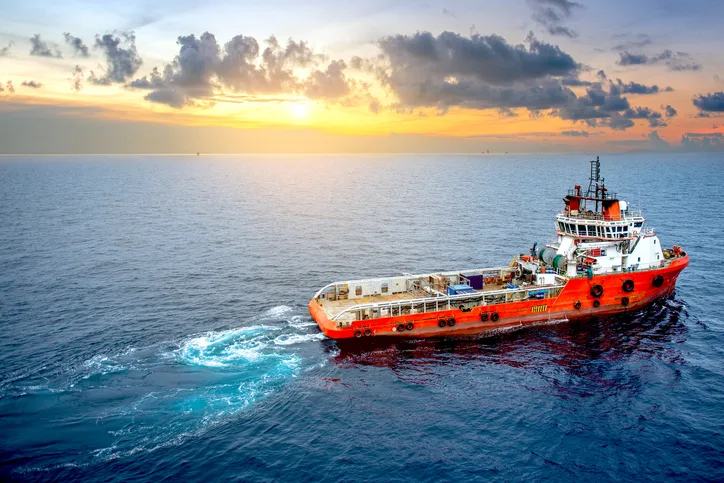
Crewboats are exactly what the name suggests: vessels built to move offshore workers, along with fuel, water, and light cargo, between the mainland and offshore platforms, rigs, and drillships. They vary in size, from small (30- to 60-foot) vessels working close to shore to larger (nearly 200-foot-long) vessels designed to travel hundreds of miles from port.
The typical crewboat is manned by a four- or five-member crew and can carry 20 to 30 passengers at a time, usually at speeds that allow it to complete a trip in hours rather than days. That speed is the point: offshore drillers can’t afford to wait days for workers and supplies to arrive at a platform. But this need for speed also creates risk: A crewboat moving quickly through open water lacks the stability of a larger vessel. A sudden squall and rough seas can quickly lead to disaster, before the crew even has time to react.
Because of this inherent danger, a crewboat is subject to specific federal regulations intended to mitigate the risks typical of volatile marine environments:
- Design and construction standards: Offshore supply vessels, including those transporting crew to platforms and rigs, must be built and inspected to Coast Guard construction standards. However, grandfathering provisions allow older vessels built to far less rigorous d standards to remain in service, sometimes for decades.
- Vessel inspection and certification: Crewboats carrying more than six passengers must hold a valid Coast Guard Certificate of Inspection, which sets the vessel’s maximum passenger count, minimum crew, and approved routes based on a review of its stability, hull condition, and fire safety systems. However, vessels built before March 15, 1996 are legally allowed to keep operating under whatever safety standards existed at the time they were constructed,
- Operator licensing and experience: A captain running an offshore crewboat or supply vessel must hold a specific Coast Guard license that requires years of documented experience as a mate or master to obtain.
- Work hours and rest requirements: Federal law requires crew members to get a minimum of 10 hours of rest in any 24-hour period. However, tight schedules and a shortage of qualified seamen might lead crew members to work beyond permitted hours.
- Drug and alcohol testing: Crew members are subject to Coast Guard drug and alcohol testing, including mandatory testing of anyone involved in a serious marine incident within 32 hours of the accident.
- Presumption of fault in a collision: When a crewboat strikes a stationary platform, a long-established Supreme Court precedent holds that the presumption of fault falls on the vessel owner. That means the company must prove otherwise to avoid liability, giving injured workers the advantage in any resulting litigation.
These regulations reflect the reality of maritime work, where there is little room for error. When a disaster occurs because an offshore company failed to abide by these standards, that failure constitutes strong evidence of negligence. Maritime workers and their families who fall victim to that negligence deserve to be compensated for their preventable pain and suffering.
Crewboat Accidents: Common Causes of Offshore Injury and Death
Crewboats can capsize, sink, or collide with docks, platforms, and other vessels for any number of reasons, including many that are entirely preventable.
- Operator fatigue: The crew is entitled to a minimum amount of rest between shifts. Yet offshore companies have been known to pressure captains and crew to keep working through those rest periods to maintain tight schedules.
- Understaffed crews: Minimum crew requirements exist for a reason. But a maritime company may be reluctant to delay a trip to find a replacement if they’re short on personnel.
- Weather and sea conditions: Unfortunately, a weather forecast isn’t a guarantee, and forecasting errors aren’t unheard of. Weather conditions can also change in ways that weren’t predicted once a crewboat gets underway.
- Docking and platform transfers: A crewboat surging against a dock or platform’s landing in rough seas can crush a worker standing near the rail or trying to step onto a swing rope.
- Mechanical failure: A vessel with a history of engine, steering, or navigation equipment problems poses an ongoing risk to everyone aboard. However, production pressures may cause a company to delay repairs to avoid taking a vessel out of service.
- Inattentive lookout: Every crewboat must assign someone to watch for other traffic. When a watch officer gets distracted, whether by a phone, paperwork, or anything else pulling attention away from the water, even a second of inattention can set the stage for an accident.
- Communication failures: When vessels maneuvering near each other fail to clearly signal their intentions, the risk of collision increases exponentially.
The Real Cost of Crewboat Accidents: Common Injuries
The combination of high speed, a lack of restraints in a typical passenger cabin, and the distance from shore leaves little room for error aboard a crewboat. When one of these vessels collides with a platform or another ship, capsizes on the open ocean, or sinks below the waves, the resulting injuries are rarely minor. In fact, they’re often catastrophic and frequently deadly.
- Spinal injuries: A crewboat launching off a wave in rough seas and slamming back down can generate a violent compressive force that travels through a passenger’s seat and into the spine, resulting in a “deck-slap” injury that causes vertebral compression fractures and possibly nerve damage. A collision, a hard impact against a bulkhead, or a fall can also lead to spinal injuries. The most severe impacts can damage the spinal cord itself, resulting in partial or total paralysis.
- Traumatic brain injury: A sudden collision or other sudden impact can cause passengers and crew to be thrown about the vessel or be struck by falling objects, causing traumatic brain injuries that range from concussion to permanent brain damage.
- Facial fractures and lacerations: The same impact that causes a head injury can also shatter bones in the face. Lacerations from broken glass or metal framing, or burns from a fire, can leave permanent scars even after the wound itself heals.
- Internal injuries: The impact of a wave, a violent collision, or a falling object can cause internal bleeding or organ damage that may not be immediately obvious.
- Crush injuries: A worker caught between the hull and a platform’s landing structure during a rough transfer, or trapped against the hull or shifting cargo during a capsizing, can suffer crushing injuries severe enough to result in traumatic or surgical amputation.
- Drowning: A worker who goes overboard during a transfer, or who ends up in the water after a crewboat capsizes or swamps in rough seas, is likely to drown in the absence of a quick rescue.
- Burns: A fire aboard any vessel is incredibly dangerous and can cause severe burns to both passengers and crew.
Who Can I Sue After a Crewboat Accident?
Like most offshore disasters, a crewboat accident can involve multiple liable parties. Identifying every individual and entity responsible and pursuing the appropriate remedies under applicable maritime law will be key to maximizing your compensation:
A Maritime Employer
If you’re an injured crew member, the Jones Act requires your employer to pay you maintenance and cure, a no-fault daily benefit covering your living expenses and medical care until you reach Maximum Medical Improvement, or MMI. If your employer’s carelessness or recklessness contributed to your injuries, you can also file a Jones Act negligence claim to recover the full range of economic and non-economic damages incurred due to your injuries. However, if you’re an offshore worker who was traveling to a platform, you’re likely covered by the Longshore and Harbor Workers’ Compensation Act (LHWCA), which bars you from suing your employer.
The Crewboat Owner
Whether or not the vessel owner is your employer, you may have a separate unseaworthiness claim under general maritime law if the crewboat, its equipment, or its crew wasn’t fit for the job. This is also a no-fault claim: you don’t have to prove anyone was careless, only that the unsafe condition existed and caused your injury.
The Offshore Operator
If you were hurt during docking or transfer at the platform itself, the offshore company responsible for the platform may share liability if its landing structure or lighting contributed to the accident. If you’re a platform-based worker rather than crew, the Outer Continental Shelf Lands Act may also apply to your claim against the platform operator.
A Manufacturer or Maintenance Company
If a defective part or a third-party contractor’s negligence contributed to a mechanical failure that led to a crewboat accident, you may have a separate negligence claim against them, in addition to any claim against your employer or the vessel owner.
Wrongful Death Claims
If you lost a loved one to a crewboat accident, your family may be able to file a claim under the Death on the High Seas Act (DOHSA) if the accident occurred more than 3 nautical miles offshore. If they met the legal definition of a seaman and was an employee assigned to the vessel, you can pursue a wrongful death claim under the Jones Act and an unseaworthiness claim if unsafe conditions aboard the crewboat caused their death.
The families of passengers who died while being transported to a fixed platform are also entitled to compensation under the OCLSA.
What to Know About Filing Deadlines
Regardless of who is at fault, you should be aware that any claim will be subject to a strict deadline known as the statute of limitations:
- Jones Act and general maritime claims, including unseaworthiness and wrongful death, generally must be filed within three years of the accident or death.
- Wrongful death claims under the DOHSA also generally carry a three-year deadline.
- OCSLA claims are subject to the nearest adjacent state’s personal injury statute of limitations. For example, if Texas is the nearest adjacent state, you would need to file your claim within two years of your injury.
If you miss your filing deadline, you lose the right to compensation no matter how strong your case. It’s in your best interest to contact an experienced maritime attorney as soon as possible to ensure you’re able to take full advantage of the rights afforded to you under maritime law.
What to Do After a Crewboat Accident
The days and weeks after a crewboat accident are chaotic, especially if you or a loved one were hurt. But while it’s natural to feel overwhelmed, keep in mind that the maritime companies responsible for your pain and suffering are already moving to protect themselves. If you’re going to recover all the compensation you’re owed, you need to move quickly as well.
- Report the injury the same day, in writing: Tell the captain or whoever’s in charge as soon as it happens, and make sure a written report is created.
- Get evaluated as soon as you’re back on shore or at the platform: Going to the ER or the worksite infirmary, even if you feel fine, ensures timely treatment of any injuries that aren’t immediately apparent and creates a record linking them to the crewboat accident.
- Record everything you remember: Sea and weather conditions, visibility, how the platform transfer was handled, whether the boat felt overloaded, and any other details, no matter how minor they might. Get the names and contact information of any witnesses.
- Say as little as possible about the accident, especially online: Assume the company is already looking for anything that could undercut your claim, including your social media. A casual post, a photo, even a comment meant as a joke can be used to argue your injuries aren’t as serious as you say.
- Don’t talk to the insurance adjuster, and don’t sign anything: Their job is to save the company money, not to look out for you. A recorded statement or a quick signature can waive rights you don’t even know you have yet.
- See your own doctor, not just one the company sends you to: A physician paid by the company may be pressured to downplay your injuries and clear you to work again as fast as possible. You have a right to see providers of your choosing.
- Keep a record of everything the accident has cost you: Medical bills, missed paychecks, prescriptions, and a simple daily note on how you’re doing physically and emotionally. These records will allow your lawyer to calculate a damage model that accounts for the full scope of your losses.
- Contact an experienced maritime lawyer ASAP: A maritime injury claim is nothing like a typical personal injury claim. Our undefeated offshore lawyers have a deep understanding of maritime law, and we have the resources to investigate these types of accidents and recover the evidence needed to build the strongest case on your behalf.
Injured in an Offshore Crewboat Accident? Contact Our Undefeated Maritime Lawyers at 1-888-603-3636 for a Free Consultation
Our Undefeated Maritime Attorneys have won billions in record-breaking verdicts and settlements — including the #1 Maritime Settlement in Texas for 2025—for workers and families along the Gulf Coast, and we know what it takes to recover the maximum compensation allowable under maritime law.
If you were hurt or lost a loved one in a crewboat accident, our nationally recognized maritime lawyers are ready to help you get your life back on track. Call, use the chat button on our homepage, or click here to send us a confidential message.
All consultations are free, and you won’t owe us a dime unless we win your case.