
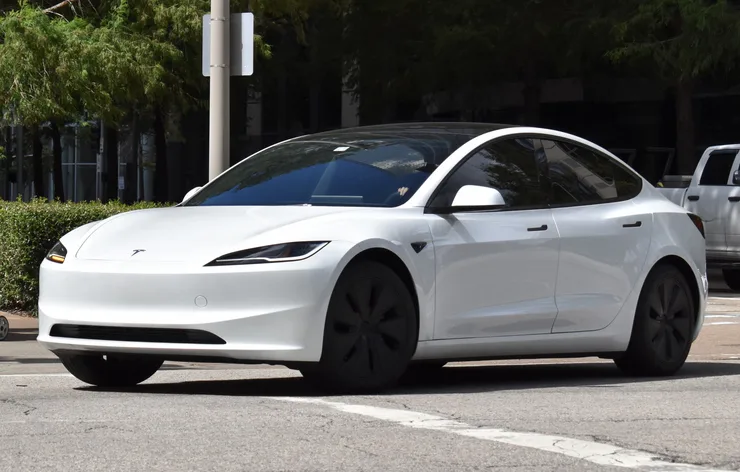
Texas Tesla Accident Lawyers
Newly disclosed federal records have confirmed that the driver-assist system was engaged when a Tesla electric vehicle crashed in southern New Jersey last year, tragically killing an 82-year-old man.
While the filing doesn’t mention Tesla’s Autopilot or Full Self-Driving technology specifically, the confirmation adds to growing questions about the Austin-based company’s driver-assist system, including those raised by a fatal Katy crash that led to our own firm’s Tesla lawsuit filing over the summer.
2019 Tesla Model 3 Ran Stop Sign at New Jersey Intersection
New Jersey State Police were called to the intersection of County Route 671 and Chestnut Avenue in Buena Vista Township shortly before 7:00 p.m. on July 6, 2025.
According to media reports, the 2019 Tesla Model 3 ran a stop sign and struck a Honda Civic making a left turn through the intersection, leaving its 82-year-old driver with fatal injuries. Four others, the Tesla driver and three passengers, were hospitalized with moderate injuries.
At the time, local coverage suggested the crash involved only a routine traffic violation, with no mention of Tesla’s Autopilot or FSD features. The New Jersey State Police investigation into the fatal wreck is ongoing.
What Tesla Disclosed to Federal Regulators
Under a standing order issued by the National Highway Traffic Safety Administration (NHTSA), automakers must report any accident in which a Level 2 driver-assist system was active within 30 seconds of impact. According to Electrek, Tesla’s own filing on the Buena Vista crash indicates that the company’s vehicle telemetry confirmed the driver-assist system was engaged when the Model 3 blew through the stop sign and collided with the Honda Civic.
Unfortunately, the filing redacts the name of the specific software, so there’s no way to know for certain whether it was Autopilot or FSD. However, according to Electrek, the fact that the crash occurred at an intersection points to Full Self-Driving:
“Reading a stop sign and deciding whether to stop is a City-Streets function, and that’s FSD. Basic Autopilot is built as a highway lane-keeping system, and it does not respond to stop signs,” the article states. “So a driver-assist car verified engaged as it ran a stop sign was, most likely, running FSD.”
Another detail in the filing raises more questions than it answers: the Tesla’s recorded speed just before impact was 4 mph, more consistent with a rolling stop than a car plowing through an intersection at speed, and hard to reconcile with a collision severe enough to kill the Civic’s driver and deploy the car’s airbags.
Recent Tesla Lawsuits and Settlements
These latest disclosures come as the company faces a growing number of Tesla lawsuits over its Autopilot and FSD technologies, litigation that by some estimates could ultimately cost the company as much as $14.5 billion.
Just this past February, a federal judge upheld a $243 million jury verdict against the company stemming from a 2019 Autopilot crash in Florida, one of the few such cases Tesla has allowed to reach a verdict rather than settle. Since then, the company has resolved case after case, including a June settlement over a Tesla FSD crash that killed a pedestrian in Arizona. Just weeks ago, the company also struck a confidential settlement in a case involving a Tesla that collided with a parked fire truck in California, killing its driver.
These and other Tesla settlements have allowed the company to avoid additional jury trials, each of which could have forced Elon Musk to repeat his allegedly exaggerated public claims about the capabilities of the company’s driver assist features under oath.
Our Tesla Accident Lawyers are currently representing the family of a Katy, Texas, woman who was killed in June when another Tesla Model 3 crashed into her home. According to the driver, Autopilot was engaged when the vehicle failed to navigate a turn, left the roadway at high speed, and struck the residence. The complaint pending in Harris County District Court asserts design defect and failure to warn against the EV manufacturer, as well as negligence and gross negligence against the driver.
Texas Tesla Accident Lawyers: Call 1-888-603-3636 for a Free Consult
Having won billions, including Record-Breaking Verdicts and Settlements, for thousands of clients in Texas and across the United States, our Tesla Accident Lawyers have the knowledge, resources, and experience to successfully take on the largest, most powerful companies in the world.
If you or someone you love was hurt in a crash and believe Tesla’s Autopilot or Full Self-Driving technology was to blame, call us for a free consultation at 1-888-603-3636, use our chat button, or send us a confidential message through this website.
All consultations are free, and you won’t pay a dime unless we win your case.