
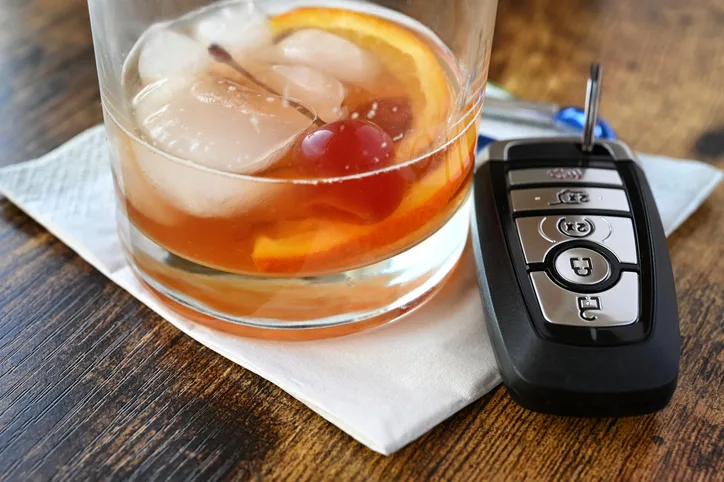
Drunk driving has long been a problem in Texas.
Now, a new study is shedding light on the severity of the problem, revealing that six of the ten cities in the nation with the highest risk of drunk driving fatalities are located right here in the Lone Star State.
Having won billions for thousands of clients across Texas and throughout the United States, our Undefeated Houston Car Accident Lawyers are committed to holding impaired and reckless drivers accountable on behalf of the innocent motorists, cyclists, and pedestrians who all too often must pay the highest price for their negligence. Backed by our resources, experience, and a willingness to go to trial when insurance companies won’t negotiate in good faith, we don’t just win for our clients—we set records.
From Austin to Houston: How Texas Cities Rank
The analysis, published by CarPro, focused on where impaired driving is most likely to turn deadly, rather than arrest numbers or enforcement activity alone.
Cities were evaluated using two key measures: the share of fatal crashes involving a driver with a blood alcohol concentration (BAC) of 0.08% or higher, and the percentage of adults (over 18) in each city who report binge drinking. Cities with higher percentages in both categories ranked higher for drunk driving fatality risk.
So how did Texas’s biggest cities fare?
- Austin, Texas (No. 1): According to the CarPro report, Austin ranks first in the nation for fatal crashes involving alcohol, with a rate of 83.19%. This is the highest percentage among the cities included in the study. Austin’s adult binge drinking rate exceeded 26%.
- Dallas, Texas (No. 3): In Dallas, 75% of fatal crashes involved a drunk driver, placing the city third overall. The study also found that 22.50% of adults report binge drinking.
- San Antonio, Texas (No. 4): San Antonio ranks fourth nationally, with alcohol involved in 82.11% of fatal crashes. Just under 20% of adults in San Antonio reported binge drinking.
- Fort Worth, Texas (No. 7): Nearly three out of every four fatal crashes in Fort Worth involved an impaired driver, according to the study. Almost 23% of the city’s adults reported binge drinking.
- Houston, Texas (No. 9): Alcohol was involved in 72.13% of Houston car accidents, while just under 22% of adults reported binge drinking.
- El Paso, Texas (No. 10): In El Paso, 82.09% of fatal crashes involve a drunk driver, although a comparatively lower share of adults (17.50%) report binge drinking.
Other cities in the top 10 included Chicago (No. 2), Kansas City (No. 5), Charlotte (No. 6), and Denver (No. 8) — leaving Texas as the only state with multiple cities on the list.
Impairment Starts Before the Legal Limit
If you’re like many drivers, you might believe you’re impaired only once your blood alcohol concentration (BAC) reaches .08%. But in reality, alcohol starts affecting driving ability almost immediately, with the risk of a serious or fatal crash rising well before a driver is legally “drunk.”
In fact, according to the National Highway Traffic Safety Administration (NHTSA), any amount of alcohol interferes with the brain’s ability to process information, control movement, and make sound decisions. At a BAC as low as 0.02%, drivers may experience declines in visual tracking and judgment. As levels approach 0.05%, coordination and reaction time deteriorate further, increasing the likelihood of delayed braking, poor steering control, and failure to respond to unexpected hazards. By the time a driver reaches 0.08%, muscle coordination, perception, and decision-making are significantly impaired.
Factors like body weight, fatigue, food intake, and the use of prescription or over-the-counter medications can also influence how quickly a person becomes impaired.
Drunk driving, or even “buzzed” driving, is never safe. But getting behind the wheel even after one or two drinks is particularly dangerous in densely populated urban areas, where there’s so little room for error. In a large city like Houston, traffic is heavier, and drivers are constantly making decisions about speed, spacing, and right-of-way. If alcohol slows a driver’s reaction time and clouds their judgment, they’re more likely to brake too late, drift into the wrong lane, or miss hazards in time to avoid a collision.
Conditions only worsen at night, when drunk driving is more common. Visibility is reduced, and traffic patterns become even less predictable. People may be heading out for a night on the town, while others commute to overnight shifts, keeping cars on the road well into the early morning hours.
Drunk Driving in Texas Will Cost You
In Texas, the legal limit for most drivers is a BAC of 0.08%. However, drivers under 21 are subject to a zero-tolerance standard, meaning any detectable amount of alcohol can result in charges. Commercial drivers are held to an even lower limit of 0.04%.
Even a first DWI conviction can lead to jail time, fines, and the loss of driving privileges. In practice, a first offense often results in probation. First-time offenders may also be required to attend alcohol education programs and comply with strict conditions on when and how they are allowed to drive.
Second and third DWI convictions in Texas usually bring longer jail or prison sentences, much higher fines, and mandatory installation of ignition interlock devices in personal vehicles. These offenses are often charged as felonies, and the conviction can follow a driver for the rest of their life.
When a drunk driving crash causes serious injury, Texas prosecutors may file intoxication assault charges. If someone is killed, the charge becomes intoxication manslaughter. Either offense is a felony, and a conviction can carry decades in prison.
Celebrate Safely This Holiday Season
As the holiday season gets underway, you may find yourself driving later at night after a party, dinner, or other celebration where the drinks were flowing. By planning ahead, you can avoid making a mistake that would place you — and others on the road — in danger.
- Set a limit before the first drink.
Deciding in advance how much you plan to drink creates a clear stopping point before alcohol starts affecting judgment. Holiday gatherings often involve refilled glasses and casual pouring, which makes it easy to drink more than intended without realizing it. Setting a limit early makes it easier to recognize when it’s time to stop — and to stick with that decision. - Slow the pace and pay attention to how alcohol affects you.
Drinking quickly allows alcohol to build up in the bloodstream before its effects are fully felt. Slowing down gives your body time to process each drink and makes it easier to notice early signs of impairment, such as slower reaction time, reduced coordination, or impaired judgment. - Eat before and during drinking.
Alcohol is absorbed more quickly on an empty stomach, which can cause impairment to set in faster and more intensely than expected. Eating before or during a gathering slows alcohol absorption and helps prevent rapid intoxication, reducing the risk that you’ll misjudge your condition later in the evening. - Alternate alcohol with water or non-alcoholic drinks.
Switching between alcoholic and non-alcoholic beverages helps regulate pace and reduces overall alcohol consumption without drawing attention to it. Staying hydrated also helps people remain more aware of how alcohol is affecting them over time. - Plan transportation ahead of time.
Waiting until the end of the night to decide how to get home can be a recipe for disaster. Deciding ahead of time whether you’ll rely on a designated driver, rideshare, public transportation, or arrange for a place to stay eliminates any temptation to “chance it” behind the wheel. - Step in when someone shouldn’t drive.
Friends and family are often the last line of defense when someone who has been drinking intends to drive. While it can be uncomfortable, stepping in — offering a ride, calling a rideshare, or taking keys — can save lives. - Hosts can help set expectations.
Hosts play a meaningful role in reducing impaired driving by offering food, providing non-alcoholic options, and encouraging guests to plan safe rides home. Creating an environment where transportation is discussed openly makes it easier for guests to make safer choices at the end of the night.
Responsible drinking doesn’t mean you can’t celebrate the holiday season. Just remember that impairment can set in much faster than you might expect. By planning ahead, you can enjoy the festivities and avoid a mistake that could have devastating, lifelong consequences for yourself and for others.
What to Do After a Drunk Driving Accident in Texas
Unfortunately, you can’t assume every driver will act responsibly, and your chances of being caught up in a Houston car accident caused by an impaired driver are fairly high. So what should you do if you or a loved one is hurt in a drunk driving crash this holiday season?
- Call 911 immediately. Calling 911 will ensure that police and EMTs arrive at the scene. The resulting police report will also be critical evidence if you choose to file suit against the drunk driver responsible for your injuries.
- Document the scene if you are able. If you’re physically able and road conditions are safe, take photos of all vehicles involved, including any damage and their license plates, as well as debris, skid marks and road conditions. Be sure to also get the names and contact information for any witnesses before they leave the scene.
- Head to the ER, even if you feel fine: Many serious injuries are not immediately obvious. Getting checked out, even if you feel fine or think your injuries are minor, is not only important for your health, but it will also create an official record of your injuries if you choose to pursue legal action.
- Contact your insurance company: Even if it’s clear a drunk driver was to blame for the crash, you still need to contact your insurance company to avoid a detail of coverage that would prevent you from receiving PIP, Med-Pay, and other benefits that could otherwise be used to help cover your medical bills and other expenses.
- Don’t speak to the other company’s insurance adjuster: The adjuster isn’t interested in helping you; they only want to low-ball your claim or avoid paying you entirely. Don’t talk to them, provide a recorded statement, or sign anything without first speaking to your own lawyer.
- Follow all medical instructions and attend follow-up appointments: A few missed appointments could give the other driver’s insurer an opening to question your claim. You should save receipts for co-pays, prescriptions, and other out-of-pocket costs related to your injuries.
Our Undefeated Houston Car Accident Lawyers Can Help: Call 1-888-603-3636 or Click Here for a Free Consult.
Our Undefeated Drunk Driving Accident Lawyers have won billions—including record-breaking verdicts and settlements—for crash victims and their families across Texas and throughout the United States,
If you or a loved one were injured or tragically killed in a car accident caused by a drunk driver, our attorneys can help. Please call 1-888-603-3636, use the form on the right, or click here to send us a confidential email.
All consultations are free and, because we only work for a contingency fee, you won’t owe us a dime unless we win your case.