
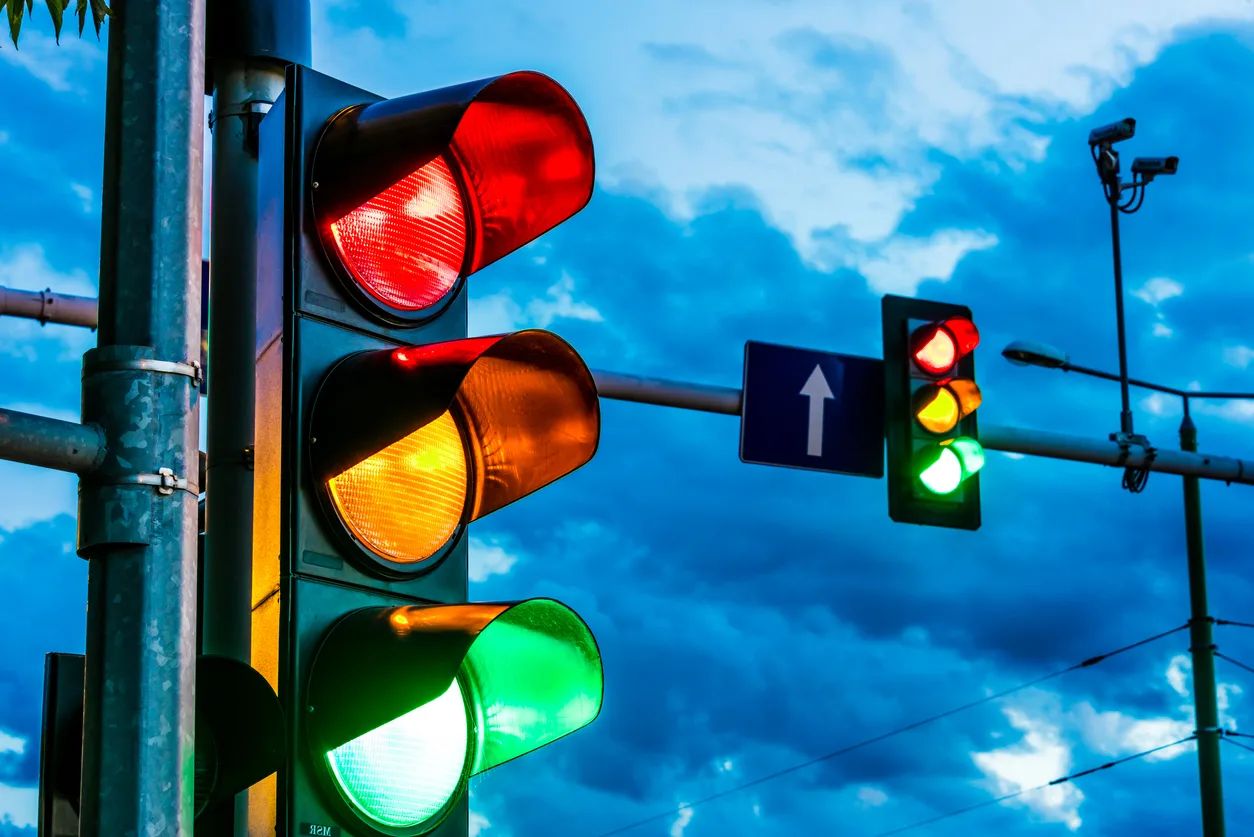
Houston drivers encounter flashing lights at an intersections all the time—especially during the city’s all-too-common storms, power outages, road work, and severe weather events. These situations demand extra caution. But for drivers behind the wheel of 80,000-pound trucks, tankers, and company vehicles, the responsibility is even greater. Federal and Texas law require commercial drivers to obey traffic signals, reduce speed, and approach flashing reds as they would a stop sign—because even a moment of inattention can cause devastating or even fatal collisions.
At Zehl & Associates, we’ve seen firsthand what happens when drivers — especially trucking companies and commercial operators — ignore these rules. Our firm has recovered Billions for accident victims, including the largest verdicts and settlements in Texas, by proving when a driver blew through a flashing red, failed to slow down, or violated basic safety standards.
Continue reading to learn how flashing red and flashing yellow lights work, and how we can help after a catastrophic crash in Houston.
What a Flashing Red Light Means
A flashing red light functions similarly to a stop sign, so drivers must:
- Come to a complete stop.
- Look for pedestrians and cross traffic.
- Yield to vehicles already in the intersection.
- Move forward only when it is safe.
Stopping fully is important because other drivers may misjudge the signal or fail to slow down. Treating the flashing red light like a four-way stop helps organize traffic when normal signals are not working. These rules don’t apply at a railroad crossing.
What a Flashing Yellow Light Means
A flashing yellow light means drivers must slow down and proceed with caution. It does not require a full stop, but caution is still necessary.
Drivers should:
- Reduce speed.
- Check cross traffic.
- Watch for pedestrians or cyclists.
- Be ready to stop if another driver enters the intersection unsafely.
These lights are often used when one direction of traffic is supposed to move more freely, while the crossing direction must stop. These rules also don’t apply at a railroad crossing.
How to Handle an Intersection When the Entire Traffic Signal Is Out
Houston storms can knock out power to traffic signals. If the light is completely dark, drivers must treat the intersection as a four-way stop.
This means:
- Each car stops completely.
- The first vehicle to reach the intersection proceeds first.
- If two cars arrive at the same time, the driver on the right goes first.
- Drivers should avoid rushing or guessing who has the right of way.
These rules reduce confusion when signals fail.
Common Mistakes Drivers Make at Flashing Lights
Many crashes at flashing lights occur because drivers assume the intersection operates like a normal one.
Common errors include:
- Rolling through flashing red lights
- Ignoring cross traffic
- Speeding through flashing yellow lights
- Assuming other drivers will yield
- Turning without checking pedestrian crossings
Flashing signals exist because conditions are not normal, which means drivers need to slow down and take extra care.
Situations When Flashing Lights Are Most Common in Houston
Houston’s weather increases the chance of traffic signal problems.
Flashing lights often appear after:
- Heavy thunderstorms
- Hurricanes or tropical storms
- High winds that damage power lines
- Electrical maintenance or outages
- Flooding that affects control boxes
During these conditions, intersections can become more dangerous because visibility is poor and roads may be slick.
How Fault Works in Crashes at Flashing Signals
Accidents at flashing lights often involve questions about right-of-way.
Fault depends on whether the driver:
- Stopped at a flashing red light
- Proceeded safely at a flashing yellow
- Failed to yield
- Drove too fast for the conditions
- Ignored traffic rules during a signal outage
It is also important to remember that Texas follows a modified comparative negligence rule with a 51% bar. Under this rule, you can typically still recover partial damages as long as your percentage of fault is less than 51%. If you are 51% or more at fault, you generally cannot recover any damages.
Contact Our Undefeated Houston Car Accident Lawyers at Zehl & Associates for a Free Consultation
Houston’s extreme weather makes flashing red and yellow signals a common hazard. If you were injured by a driver who failed to slow down, yield, or follow the law, you don’t have to take them on alone. With Billions won and the largest verdicts and settlements in Texas, our undefeated car accident lawyers have the resources, experience, and track record to take on any opponent and not just win, but set records.
If you need help after a crash involving a flashing intersection light, call 1-888-603-3636 or send us a confidential email through our Contact Us form.
All consultations are free, and you won’t owe us anything unless we win your case.
Zehl & Associates Injury & Accident Lawyers – Houston
2700 Post Oak Blvd #1000, Houston, TX 77056
(888) 603-3636
Open 24 hours

Zehl & Associates Injury & Accident Lawyers – Midland
306 W Wall St Suite 701, Midland, TX 79701
(432) 220-0000
Open 24 hours